

History of the Hop River State Park Trail
Long before it became a destination for walkers, runners, cyclists, and outdoor enthusiasts, the Hop River State Park Trail was a busy railroad corridor connecting communities across eastern Connecticut.
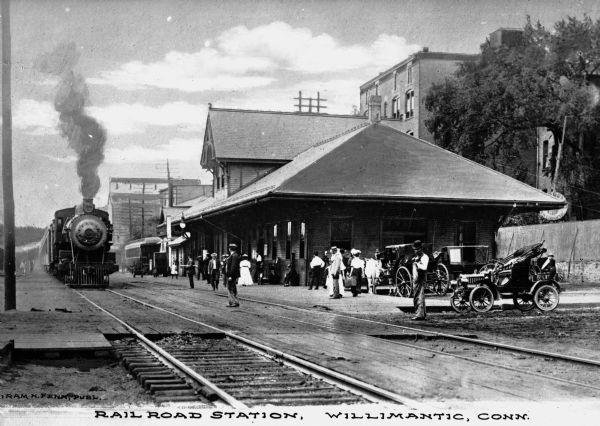
Willimantic Station
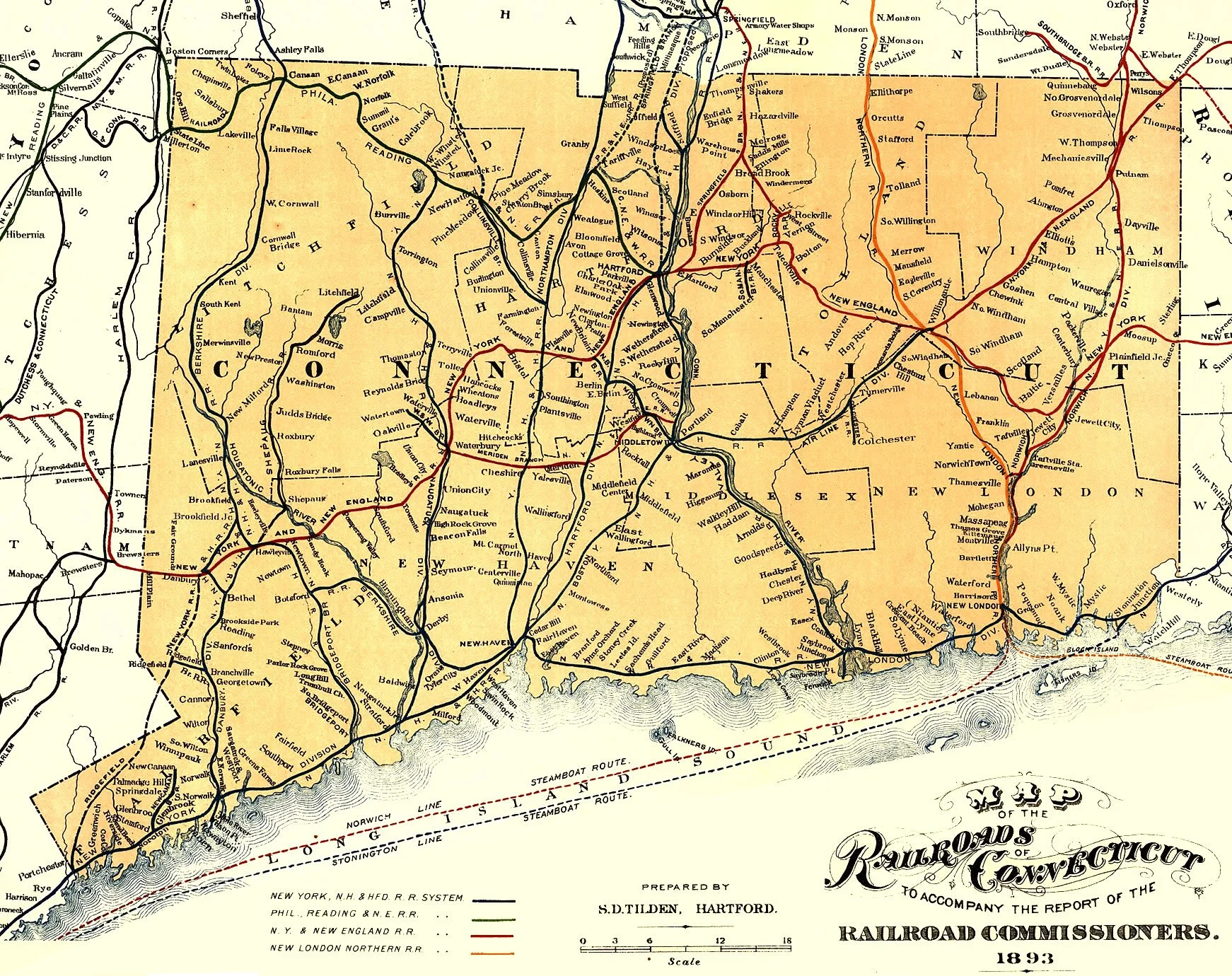
1893 Railroad Map
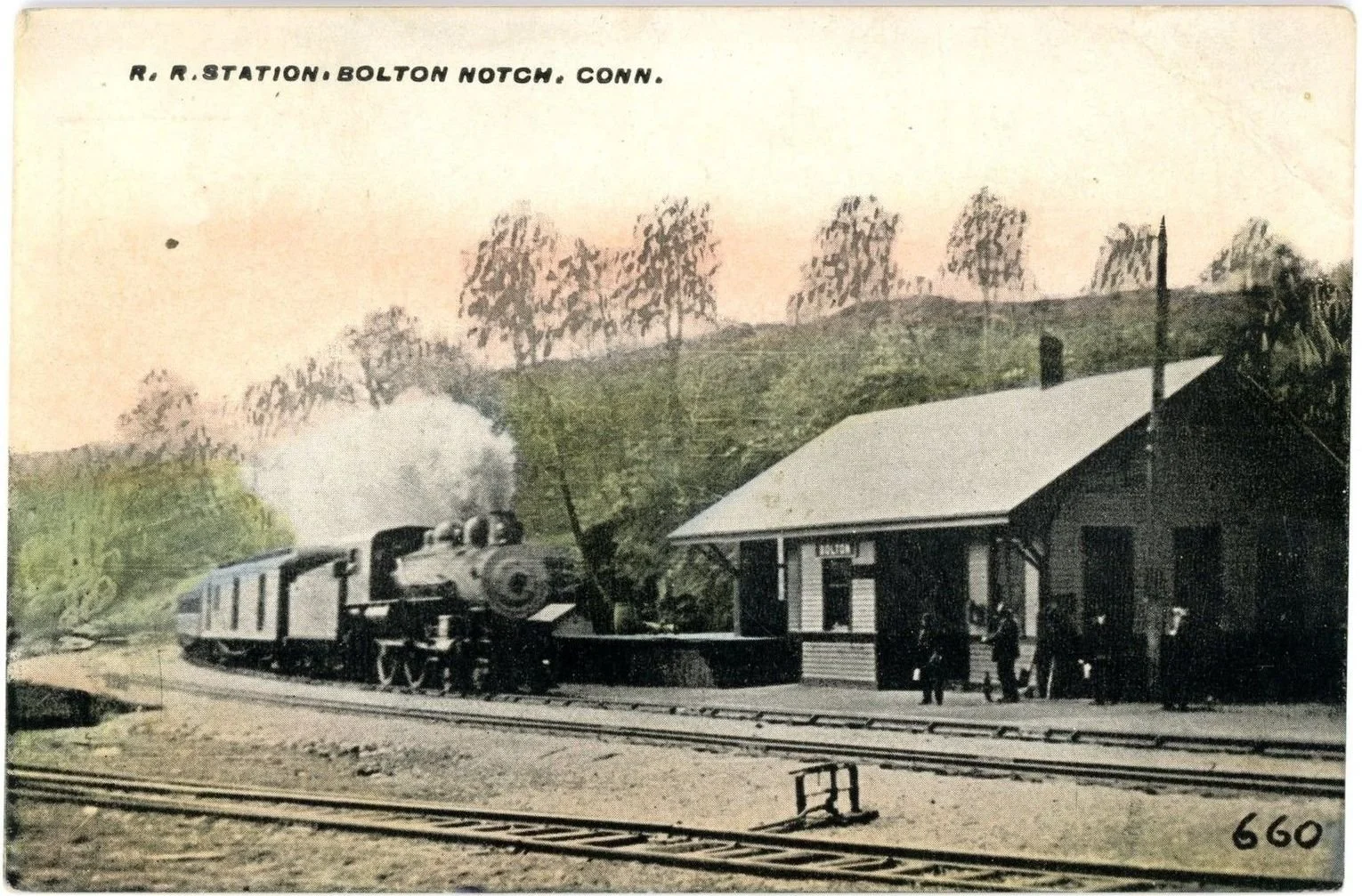
Bolton Notch Station
From Railroad Line to Recreational Trail
The route that would eventually become the Hop River State Park Trail began taking shape in 1849, when the Hartford, Providence and Fishkill Railroad constructed a rail line between Hartford and Willimantic.
Steam locomotives carried passengers and freight along the route, stopping in communities that included Manchester, Vernon, Bolton, and Andover. From Willimantic, passengers and goods could continue east toward Putnam and Providence.
The railroad expanded in the decades that followed. In 1863, a 4-mile connection to Rockville was completed. Today, that former rail corridor is known as the Rockville Spur.
In 1869, another 2.2-mile connection was constructed between the main rail line in North Manchester and the Cheney Silk Mills in South Manchester. That route is now known as the Cheney Rail Trail.
The End of the Railroad Era
A major flood in 1955 washed out a critical railroad bridge over the Quinebaug River in Putnam. The loss of the bridge eliminated through-connections to the east and contributed to the decline of rail service between Manchester and Willimantic.
Passenger and freight service gradually diminished. The railroad era officially ended when the last freight train traveled the route in September 1970.
After active rail service ended, ownership of the corridor between Manchester and Willimantic transferred to the Connecticut Department of Transportation. The tracks were removed, and the property was later transferred to the Connecticut Department of Energy and Environmental Protection for use as a linear state park.
An Overgrown Corridor With New Potential
For nearly two decades, the former railroad corridor remained largely undeveloped. Vegetation overtook portions of the route, surfaces were rough, and drainage was poor. Missing or undecked bridges also created safety concerns and made parts of the corridor difficult to use.
By the late 1980s, the national rails-to-trails movement was gaining momentum. Local visionaries, community advocates, and grassroots supporters recognized the former rail corridor’s potential as a recreational trail connecting Manchester and Willimantic.
Their work helped build support for transforming the abandoned railroad route into the Hop River State Park Trail.
The National Guard Helps Open the Way
A major step forward came in the early 1990s when an engineering division of the Connecticut National Guard selected Hop River State Park and the neighboring Air Line State Park for a training exercise.
Over approximately two years, the National Guard:
Restored drainage ditches
Removed old railroad ties
Smoothed rough portions of the trail surface
Made the corridor generally passable
The Guard’s work created a foundation for future trail development. State agencies and local towns continued making improvements, often using state and federal grant funding.
Major Trail Improvements
Over the years, a series of important projects helped transform the former railroad corridor into the trail visitors enjoy today.
2012: Andover Covered Bridge
A covered bridge was installed over Route 316 in Andover, creating a safer and more memorable
trail crossing.
2015: Willimantic Greenway Connection
The Willimantic Greenway connection was completed, linking the Hop River State Park Trail with the
Air Line State Park Trail.
This connection improved access to downtown Willimantic and expanded recreational opportunities for
trail users.
2019: Willimantic River Bridge
The bridge over the Willimantic River between Windham and Columbia was re-decked, improving safety and connectivity near the eastern end of the trail.
2024: Trail-Wide Way-finding Signs
New wayfinding signs were installed along the approximately 20-mile trail corridor and at intersecting roadways. The signs make it easier for visitors to follow the trail, identify mile markers, and connect with nearby destinations.
2025: Bolton Notch Tunnel Lighting
Lighting was installed inside the long tunnel at Bolton Notch. The project improved visibility and safety through one of the trail’s most distinctive landmarks.
The tunnel lighting was the result of years of advocacy by Bike Walk Bolton volunteers and collaboration among trail partners.
Hop River Trail - Andover Bridge Installation
Hop River Trail Tunnel Lighting
Continuing the Trail’s Story
The Hop River State Park Trail has evolved from a 19th-century transportation corridor into an important recreational and community resource. Today, it connects seven towns and provides opportunities for walking, running, bicycling, snowshoeing, cross-country skiing, and exploring Connecticut’s natural and industrial history.
The Hop River Trail Alliance works with state agencies, municipalities, community organizations, businesses, and volunteers to support the trail’s continued care and improvement. Its vision is a trail that is safe, welcoming, well-connected, and accessible to as many people as possible.
The trail’s transformation has taken decades, and its story is still being written. Through continued collaboration, thoughtful improvements, and community involvement, the Hop River State Park Trail can remain a valued resource for generations to come.
Written by John Hankins, Vice President of the Hop River Trail Alliance (July 2026)